Biggest Hp Omnibook 7 14 Inch 2025 Buying Mistakes (And How to Avoid Them)
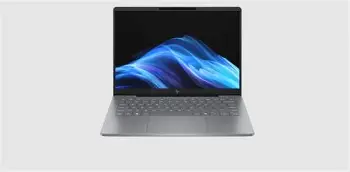
The HP Omnibook 7 14 Inch 2025 positions itself as a modern 14-inch laptop aimed at travelers, professionals, and students who want a blend of portability and capability. As with any compact laptop, the choices buyers make during configuration or purchase can dramatically influence daily satisfaction. This article breaks down the most common mistakes people make when buying the Omnibook 7 14" (2025), explains the practical consequences of each, and offers clear guidance so buyers can make decisions that match real-world needs.
Introduction: Why 14 inches still matters
Fourteen-inch laptops are a practical compromise: larger than ultraportable 13-inch models for comfort and productivity, yet noticeably lighter and more compact than many 15-inch machines. The Omnibook 7 aims to capitalize on that sweet spot with updated internals, higher-resolution display options, and a chassis tuned for travel. But the increased configurability and marketing language around features can lead to buyer confusion. This guide focuses on avoiding missteps that appear in real-world scenarios — underpowered multimedia editing, battery life surprises on long flights, poor port choices for hybrid work, and buying the wrong display type for color-critical work.
Detailed product analysis
Design and build
The Omnibook 7 14" (2025) adopts a thin-and-light aesthetic typical of premium 14-inch notebooks. Expect an aluminum or magnesium-alloy lid in higher trims and a mixed-metal/plastic chassis in entry-level configurations. The hinge design emphasizes 180-degree lay-flat capability on some SKUs, which is useful in collaborative settings and airplane trays.
Real-world implication: buyers who prioritize durability should opt for the higher-tier chassis materials. If the laptop will routinely be tossed into backpacks with other gear, the more robust construction reduces chassis flex and wear over time.
Display options
HP typically offers multiple display choices on a single model line. For the Omnibook 7 14", the options likely include:
- Full HD IPS (60–120 Hz) — good for general productivity and battery life
- High-brightness IPS or variable refresh — better outdoors and for smoother scrolling
- OLED 2.8K or similar — excellent contrast and color for media and creative work
Mistake buyers make: choosing the wrong panel for their use case. For example, selecting an OLED panel for long battery life and offline all-day work often results in disappointment because OLED can be more power-hungry at high brightness, and some high-resolution panels force GPU scaling compromises in day-to-day apps.
Performance and thermals
Performance in a 14-inch chassis is a balancing act. The Omnibook 7 likely offers options across mobile Intel and AMD CPUs, paired with integrated graphics or modest discrete GPUs in performance SKUs. Thermal design and fan tuning determine whether sustained workloads (video editing, large spreadsheets, compiling code) run at full speed or throttle to keep thermals in check.
Real-world implication: a buyer who prioritizes short bursts of speed (web browsing, presentations) may be fine with an efficient CPU. But someone who regularly renders video or runs simulations needs an SKU with better cooling and possibly a discrete GPU to avoid prolonged thermal throttling.
Battery life and charging
HP's power configurations usually balance battery capacity and charging methods. Fast-charge technology can refill a battery quickly, but real-world endurance depends on the chosen display, background workloads, and power profile. Buyers often assume "fast charge = long battery life," which is incorrect.
Practical point: for frequent flyers or remote workers, aim for the largest battery option available and pair it with a Full HD display to maximize hours between charges. Fast charging is a convenience, not a substitute for capacity.
Keyboard, trackpad, and webcam
The 14-inch form factor usually allows a comfortable keyboard layout with full-sized keys and generous travel on higher trims. Trackpad quality can vary between models; higher-tier Omnibook 7 units are likely to have larger, precision glass trackpads and improved haptics. Webcam resolution, privacy shutters, and dual-array microphones should be checked if the user attends frequent video calls.
Discover deals on Laptops & Computers — updated daily.
View Offers →Buyer note: professionals who host client calls should prioritize a version with a higher-resolution webcam and better microphones — otherwise external peripherals become necessary.
Ports and expandability
Port selection is one of the most consequential real-world considerations. The Omnibook 7 may include Thunderbolt/USB-C, USB-A, HDMI (or micro-HDMI), microSD, and a headphone jack. Some models omit Ethernet, which affects users in offices with wired networks.
Typical mistake: assuming wireless can replace every port. Photographers, video editors, and presenters often need fast external storage, HDMI for external projectors, or legacy USB-A accessories. Verify port counts and types before purchase to avoid carrying a collection of dongles.
Software, warranty, and support
HP ships many laptops with a mix of useful utilities and some preinstalled third-party apps. Evaluate the included warranty and upgrade options. Extended warranty or accidental damage protection can be valuable for students and frequent travelers.
Practical advice: buyers planning to keep a laptop for more than two years should consider an extended warranty or life-of-device protection to hedge against accidental drops, spillage, or hardware failures.
Pros & Cons
- Pros
- Compact 14-inch balance of portability and usable screen area
- Multiple configurations that suit students, professionals, and light creators
- Potentially strong build quality on higher trims
- Good keyboard and trackpad ergonomics expected
- Flexible charging options and fast-charge availability
- Cons
- Higher-end displays reduce battery life compared with Full HD options
- Thermal limits on sustained heavy workloads in slim chassis
- Entry-level SKUs may skimp on ports and upgradeability
- Preinstalled software can add clutter and first-boot setup time
- Configurations can be confusing — risk of overpaying for mismatched features
Comparison: Omnibook 7 14" (2025) vs. Typical Alternatives
| Feature | Hp Omnibook 7 14" (2025) | Typical 14" Ultrabook | Previous-gen 14" Omnibook/Competitor |
|---|---|---|---|
| Chassis options | Mixed — aluminum and lighter plastic depending on trim | Usually all-metal on premium models | Similar, but older models may be thicker |
| Display choices | FHD IPS / high-brightness / OLED option | FHD common; OLED less common | FHD with fewer high-res or OLED options |
| Performance | Modern mobile CPUs; optional discrete GPU | Balanced mobile CPUs; fewer discrete options | Older CPUs; lower multi-core performance |
| Battery life | Varies by config; best with FHD and larger battery | Often optimized for all-day use | Incremental improvements over previous models |
| Ports | Thunderbolt/USB-C, USB-A, HDMI on higher trims | Trend toward USB-C only | More legacy ports on some older models |
| Price range | Entry to premium depending on options | Similar tiered pricing | Discounted older models |
Top buying mistakes and how to avoid them
Mistake 1: Choosing the wrong display for intended use
Many buyers assume the highest-resolution or OLED option is automatically the best. In reality, the display choice should hinge on actual use:
- If mobility and battery life are primary, prefer the FHD IPS panel with anti-glare.
- If color accuracy for photo/video work is important, choose a high-quality OLED or wide-gamut IPS and plan for reduced battery life and possible scaling issues.
- If outdoor use matters, prioritize a high-brightness panel rather than just resolution.
Mistake 2: Underestimating thermal performance vs. raw specs
A slim 14-inch chassis has limited thermal headroom. Buying an Omnibook 7 with a high-power CPU and expecting desktop-like sustained performance invites disappointment when thermal throttling reduces throughput.
How to avoid it: Read reviews that test sustained workloads and prioritize SKUs with better cooling or a balanced CPU selection. If heavy CPU/GPU work is common, consider a slightly larger laptop with better thermals or an external GPU solution.
Mistake 3: Ignoring port requirements
Users often buy based on thinness and forget they need legacy ports for peripherals, external monitors, or wired networks.
How to avoid it: Make a short list of the devices used daily (external monitor type, camera card reader, USB-A devices). Ensure those ports exist or budget for a single reliable hub that matches the exact needs rather than a multiplicity of incompatible dongles.
Find top-rated Laptops & Computers products at great prices.
See Deals →Mistake 4: Skimping on RAM and storage
14-inch laptops are often soldered RAM or have limited upgrade paths. Buying a lower-RAM configuration to save money can force early upgrades or impact productivity.
How to avoid it: For general multitasking, choose at least 16 GB of RAM. For photo/video workflows or VMs, 32 GB is preferable. Opt for an NVMe SSD with room to spare — real-world storage usage grows faster than expected when dealing with media files.
Mistake 5: Overlooking warranty and serviceability
Consumers frequently skip extended warranty or accidental coverage and later pay a premium for repairs. Similarly, some Omnibook 7 configurations may be harder to service or upgrade.
How to avoid it: Assess the return policy, local service options, and whether the device is user-upgradeable. For users who travel or work in risky environments, an accidental damage plan often pays for itself.
Mistake 6: Buying for benchmarks rather than daily experience
Benchmarks favor peak scores, but everyday performance depends on thermals, storage speed, and software tuning. Choosing the highest-spec CPU can be wasted if the cooling system cannot sustain it under real workloads.
How to avoid it: Read or watch long-form reviews that include sustained load tests and battery-life tests. Pay attention to storage performance and real-world application responsiveness rather than synthetic numbers alone.
Buying guide: What to choose based on use case
For students and general productivity
- Recommended configuration: FHD display, 16 GB RAM, 512 GB NVMe SSD, efficient mobile CPU.
- Why: Good balance of battery life, speed for multitasking, and enough storage for projects and media.
- Accessories: A lightweight sleeve and a USB-C charging brick for mobility.
For business travelers and remote workers
- Recommended configuration: High-brightness FHD display, long-life battery option, 16–32 GB RAM, business-class warranty with accidental coverage.
- Why: Prioritizes battery life, readability in varied lighting, and peace of mind for travel-related mishaps.
- Accessories: Compact travel dock with HDMI and Ethernet if frequent hotel or conference room setups are expected.
For content creators and photographers
- Recommended configuration: OLED or high-quality wide-gamut IPS, discrete GPU if available, 32 GB RAM, 1 TB NVMe.
- Why: Color-critical work benefits from accurate panels and extra memory for large files and caching.
- Accessories: Calibrator for display profiling and a fast external SSD for project archives.
For light gaming and creative hobbyists
- Recommended configuration: Mid-range discrete GPU option, good cooling SKU, FHD or high-refresh panel, 16–32 GB RAM.
- Why: Mobile discrete GPUs will run many titles at moderate settings while keeping thermals and battery manageable.
- Accessories: External controller or mouse for longer gaming sessions; consider a cooling pad for extended play.
Checklist before hitting “Buy”
- Is the display type appropriate for your main tasks (FHD vs. OLED vs. high-brightness)?
- Does the chosen RAM and storage configuration match upgradeability and future needs?
- Are the ports sufficient for daily peripherals without an awkward stack of dongles?
- Have thermal and sustained performance reviews been consulted if workload is heavy?
- Does the warranty cover accidental damage or offer convenient service options?
- Is the keyboard layout and region-specific variant correct for the buyer (important for international shoppers)?
Final considerations and real-world tips
Test the laptop in a real-world scenario if possible. Many stores allow hands-on time; try the keyboard and trackpad, check hinge stiffness, and inspect bezel thickness and screen reflectivity. If buying online, verify return windows and whether the seller provides an easy return shipping label for electronics. For people who use headphones and external mics for calls, sample microphone and speaker quality in reviews to avoid surprises.
Budget is a valid constraint, but prioritize the features that affect daily productivity: RAM and a usable display over a slightly faster CPU that will be thermally constrained. Consider total cost of ownership — accessories, warranty, and potential upgrades add to the initial price but improve long-term satisfaction.
Conclusion
The HP Omnibook 7 14 Inch 2025 can be a compelling choice for a broad range of buyers, from students to frequent travelers to content creators. The most common purchasing mistakes stem from mismatched expectations: assuming the top display equals better battery life, buying the highest CPU without checking sustained performance, or ignoring ports and warranty. By aligning configuration choices with actual daily workflows — using the checklists and use-case recommendations above — buyers can avoid those pitfalls and select a version of the Omnibook 7 that delivers the balanced, reliable experience they need.