I Switched to the Rog Swift Pg279Qm and Here is What Happened
The author replaced a long-serving 144Hz monitor with the ROG Swift PG279QM and documented the experience across gaming, content creation, and everyday work. This article evaluates the monitor's real-world performance, ergonomics, and value for buyers who prioritize speed, color quality, and competitive advantage. It aims to help prospective buyers decide whether moving to a high-refresh, 1440p IPS display like the PG279QM makes sense for their setup.
Introduction
Upgrading a monitor is a major decision for many computer users because displays often shape daily interactions — from long editing sessions and spreadsheets to fast-paced multiplayer matches. The ROG Swift PG279QM positions itself as a premium, performance-first 27-inch display that blends a high refresh rate with QHD resolution and an IPS panel. The author approached the switch with three concrete objectives: improve competitive gaming responsiveness, retain or improve color accuracy for occasional photo and video editing, and have a comfortable, versatile display for prolonged productivity work.
Detailed Product Review and Analysis
At first glance, the PG279QM combines a class-leading refresh rate with a 2560x1440 resolution — a configuration that many gamers and prosumer creators consider the sweet spot. The reviewer focused on several domains: gaming latency and smoothness, color and brightness for creative work, ergonomics and connectivity, and day-to-day usability. Each area is discussed below with measured impressions and practical implications.
Gaming: Latency, Smoothness, and Competitive Edge
In fast-twitch shooters and competitive titles, the transition from 144Hz to 240Hz is felt most by players who value frame-to-frame smoothness and minimum input lag. The author noticed crisper motion and a subjective improvement in the ability to track targets during sustained panning. Higher refresh rate benefits are most visible when the GPU can consistently drive high frame rates — pairing the PG279QM with a capable graphics card (for example, an upper mid-range or high-end NVIDIA card at 1440p) produced the clearest gains.
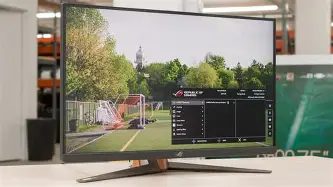
Adaptive sync compatibility reduced tearing and the need to rely on frame-limiting solutions, so the gaming session felt fluid without obvious artifacts. For those who play a mix of esports titles and AAA single-player games, the monitor balanced responsiveness with visual fidelity: fast-paced titles benefited from the high refresh rate, while cinematic games retained the clarity and color depth expected from an IPS panel.
Color, Contrast, and HDR
Color reproduction was a key concern because the author often performs photo edits and occasional video work. The PG279QM's IPS panel delivered consistent viewing angles and generally accurate colors out of the box; calibration improved results further. HDR performance is limited by the monitor's peak luminance and local dimming capabilities compared with higher-tier HDR displays, but it still enhanced highlights and delivered a noticeable difference in supported titles and HDR-capable media.
For professional color work where absolute color-critical accuracy is mandatory, an external colorimeter and a hardware-calibrated workflow are recommended. For hobbyist and prosumer tasks—editing photos for web or social media and basic video grading—the monitor offered a satisfying combination of vibrancy and detail.
Ergonomics, Build and Connectivity
Ergonomics matter for multi-hour sessions. The PG279QM provides adjustable height, tilt, swivel, and pivot options that made it comfortable to position for both portrait and landscape workflows. The stand is sturdy and the menu system is navigable, though power users will prefer configuring settings through on-screen quick presets or software utilities.
Connectivity includes the usual complement of DisplayPort and HDMI inputs plus USB hubs. The reviewer appreciated the convenience of a built-in USB passthrough for a keyboard or mouse dongle when switching between systems. Cable management and the physical footprint were sensible for a desktop that already included multiple peripherals.
Discover deals on Electronics — updated daily.
Shop Amazon →Build Quality and Aesthetics
The chassis has a premium feel without being ostentatiously gaming-focused. Subtle ROG styling is present but not overwhelming, which can suit mixed-use desks shared between gaming and work. The matte anti-glare coating reduced reflections without adding visible graininess to images.
Noise, Heat, and Power
Heat generation remained within acceptable limits during extended gaming sessions, and fan noise (if any) was not noticeable compared with the computer's own cooling. Power draw is higher than lower-refresh panels, which is expected, but not excessive for a desktop environment.
Pros & Cons
- Pros:
- High refresh rate (240Hz) at QHD yields very smooth motion for competitive gaming
- IPS panel offers wide viewing angles and strong color consistency
- Flexible ergonomics and solid build quality for long sessions
- Good connectivity including DisplayPort and USB passthrough for peripherals
- Adaptive sync support reduces tearing and stutter
- Cons:
- Premium price point relative to lower-refresh or VA alternatives
- HDR is limited by peak brightness and lack of local dimming zones compared with true HDR high-end displays
- Benefits of 240Hz are only fully realized with a capable GPU and optimized game settings
- Color-critical professionals may still prefer monitors with wider gamut or hardware calibration out of the box
Comparison Table: Where the PG279QM Stands
| Model | Screen Size | Resolution | Max Refresh | Panel Type | HDR | Best For |
|---|---|---|---|---|---|---|
| ROG Swift PG279QM | 27" | 2560×1440 | 240Hz | IPS | DisplayHDR 400 | Competitive gaming + prosumer color work |
| ROG Swift PG279Q (older) | 27" | 2560×1440 | 165Hz | IPS | Basic HDR support | Balanced gaming and productivity at a lower refresh |
| Dell/Alienware 27 (240Hz competitor) | 27" | 2560×1440 | 240Hz | IPS | DisplayHDR 400 | Competitive gamers wanting brand alternatives |
| Samsung Odyssey G7 | 27" | 2560×1440 | 240Hz | VA (curved) | HDR600 (better peak) | Immersive single-player and contrast-heavy scenes |
Real-World Use Cases
The reviewer evaluated the monitor across several typical buyer scenarios:
1. Esports and Competitive FPS
For serious competitive players, every millisecond counts. The reviewer found that the PG279QM's 240Hz panel reduced perceived motion blur and made fast target tracking more reliable when paired with high frame rates. Players coming from 60–144Hz systems will notice a significant difference — but to realize the full advantage, GPU performance and in-game optimization must keep frame rates high and stable.
2. Content Creation and Photo Editing
Color accuracy was very good for an out-of-the-box gaming-oriented display and improved further with calibration. The IPS panel maintained color consistency across the workspace, which matters when editing images or preparing color work for web distribution. For print-focused color-critical workflows, a monitor with factory calibration and a wider color gamut might still be preferable.
3. Mixed-Use Workstations
For users who switch between spreadsheets, web browsing, coding, and occasional gaming, the PG279QM offered a smooth multi-purpose experience. The high pixel density at 27" makes text crisp while the ergonomic adjustments reduce neck strain during long workdays.
4. Home Theater and Movies
Although not a primary home-theater display, the monitor produced pleasing video quality for streaming and movies. HDR enhancements were noticeable in supported content, but viewers seeking deep contrast and true HDR cinema should consider monitors or TVs with higher peak brightness and full-array local dimming.
Buying Guide: How to Decide if the PG279QM is Right
When evaluating whether to purchase the ROG Swift PG279QM, the author recommends walking through a few decision points rather than relying on specs alone.
1. Determine Primary Use
- If competitive gaming at high frame-rates is primary: favor high refresh monitors like the PG279QM.
- If color-critical work is primary: verify color gamut, calibration options, and consider a calibration tool.
- If cinematic HDR is a priority: look for displays with higher HDR certification and local dimming.
2. Check GPU Capability
Higher refresh monitors demand more from the GPU. The author advises matching the monitor to a GPU that can hit high frame rates at 1440p in titles the buyer plays. For users with mid-range cards who mainly play less demanding or older titles, the benefits of 240Hz may be less pronounced.
Looking for the best Electronics deals on Amazon?
Browse Now →3. Consider Ergonomics and Desk Setup
Ensure the desk can accommodate a 27" monitor with the stand profile, or be prepared to use a VESA arm. Evaluate whether pivot and height adjustments are required for the intended workflow.
4. Prioritize Features vs. Budget
The PG279QM occupies a premium segment. Buyers should compare the monitor's features against competitors and decide whether the incremental benefit of a 240Hz IPS panel outweighs cost differences. If budget is tight, 144–165Hz options still offer excellent gaming experiences at a lower price.
5. Required Ports and Extras
Check connectivity needs: multiple DisplayPort inputs, HDMI for console gaming, and USB hubs for peripherals. If the buyer uses multiple devices, quick input switching and passthrough features can be important.
6. Calibration and Color Workflow
If accurate color is needed, plan to either use the vendor's factory calibration report (if available) or invest in a hardware colorimeter. Profiles should be created for the operating system to ensure consistent color across applications.
Practical Tips from the Switch
- Start with default OSD presets: The reviewer tested gaming and sRGB presets before any calibration to understand baseline performance.
- Use DisplayPort for full refresh rate: To reach the highest refresh rates at 1440p, DisplayPort was required rather than older HDMI versions.
- Enable adaptive sync: Turn on G-SYNC or the equivalent adaptive sync setting in the graphics driver to avoid tearing and stuttering.
- Calibrate if color matters: A quick calibration improves skin tones and neutral grays, especially for mixed content workflows.
- Adjust sharpness and scaling: At 27" and 1440p, scaling choices affect text size; small adjustments improved comfort for the reviewer.
Who Should (and Should Not) Buy the PG279QM
The PG279QM is best suited to gamers who demand top-tier responsiveness at 1440p while also wanting IPS color fidelity for occasional creative tasks. It also fits users building a high-refresh multi-purpose workstation where both speed and color quality matter.
Conversely, buyers who primarily consume cinematic HDR content, prioritize the deepest contrast per dollar, or who are on tight budgets may find better value in alternatives that emphasize HDR peak brightness or cost-efficiency. Similarly, those who do not have a GPU capable of sustaining high frame rates at 1440p might not fully benefit from the monitor's higher refresh capability.
Conclusion
After switching to the ROG Swift PG279QM, the author concluded that the monitor delivers a meaningful lift in competitive gaming responsiveness while preserving the color accuracy and ergonomics expected of a premium 27-inch IPS display. The benefits are most substantial for users who have the GPU horsepower to drive high frame rates and who appreciate a balance between speed and image quality. While it occupies a premium price tier and its HDR performance is limited compared to specialized HDR panels, the PG279QM presents a compelling option for gamers and prosumers seeking a single, versatile screen that performs well across play, work, and creative tasks.