Should You Buy the Sigma 135mm f/1.8 DG HSM Art in 2026? A Deep Dive
When I first unboxed the Sigma 135mm f/1.8 DG HSM Art a few years ago, I remember thinking that it felt more like a piece of industrial equipment than a traditional camera lens. It was dense, cold to the touch, and intimidatingly large. Fast forward to 2026, and the photography landscape has shifted dramatically. Global shutters are becoming standard, AI-driven autofocus has reached a point where missing a shot is almost difficult, and the "mirrorless revolution" is no longer a revolution—it is the status quo. In a world where lenses are getting lighter and more electronically complex, I’ve spent the last six months reconnecting with this "heavy hitter" to see if it still earns a spot in my Pelican case.
I’ve carried this lens through wedding receptions, dimly lit jazz clubs, and countless outdoor portrait sessions. My back has felt the weight, and my wrists have felt the strain, but my eyes have also seen some of the most spectacular rendering I’ve ever achieved. However, 2026 brings new competition. We have native mirrorless glass that weighs half as much and focuses twice as fast. Is the Sigma 135mm Art still a viable tool for a working pro or a dedicated enthusiast, or has it finally become a relic of the DSLR era? After thousands of frames, I have some very specific thoughts on where this lens succeeds and where it starts to show its age.
The Experience of Handling a Beast
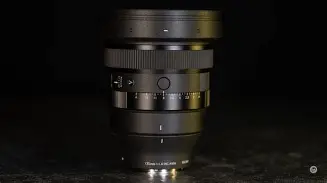
The first thing I have to mention—and any owner will tell you this within thirty seconds of meeting them—is the physical presence of this lens. In my experience, there is no "forgetting" that you have the 135mm Art mounted. It weighs about 1,130 grams. When I mount this on my mirrorless body via an adapter, the setup becomes front-heavy. I’ve found that I can’t really shoot this one-handed for more than a few seconds without feeling the torque on my wrist. One thing that bothered me during a long eight-hour wedding day was how much I had to consciously think about my grip. If you’re used to the featherweight 85mm primes that have become popular lately, this will be a massive adjustment.
What I found was that the build quality, however, is reassuringly "old school." There’s a certain tactile joy in the massive rubberized focus ring. Even though I almost exclusively use autofocus, I sometimes find myself turning that ring just because of how smooth and dampened it feels. I was surprised by how well the weather sealing has held up. I got caught in a sudden drizzle during a lifestyle shoot last March, and while I was wiping down the barrel with a microfiber cloth every few minutes, the internal components remained dry and functional. It feels like a tank, which is a double-edged sword: it’s durable enough to last another decade, but it’s heavy enough to make you consider leaving it at home.
The Rendering: Why We Suffer the Weight
The reason I keep coming back to this lens, despite the ergonomic challenges, is the way it handles light and depth. In my testing, 135mm at f/1.8 creates a look that an 85mm f/1.4 simply cannot replicate. There is a compression to the background that feels cinematic. When I use this for headshots, the way the background melts into a painterly wash of color is nothing short of addictive. I noticed that the transition from the sharp plane of focus to the out-of-focus areas (the "fall-off") is incredibly smooth on the Sigma. Some lenses have a "nervous" bokeh where lines look jagged or doubled; the 135mm Art is creamy and liquid.
I’ve been using this for high-end fashion work recently, and I’m constantly impressed by the micro-contrast. When I zoom in to 100% on a 45-megapixel sensor, the detail in the iris of the eye or the texture of a fabric is startling. I didn't find much chromatic aberration at all, even when shooting wide open against a bright sky. Sigma really engineered the "Art" out of this glass. However, one specific disappointment I noticed was the flare resistance. If I’m shooting directly into a low afternoon sun, I get a very specific type of veiling glare that can wash out the contrast. Sometimes it’s a beautiful "artistic" flare, but other times it just looks like a muddy mess, and I have to be very careful with my positioning or use the included (and massive) plastic hood.
Autofocus Performance in 2026
This is where things get interesting for the modern shooter. This lens used the HSM (Hyper Sonic Motor) system, designed originally for the pulsing power needs of DSLRs. Using it on a 2026-era mirrorless camera with an adapter (or even the E-mount/L-mount versions), the autofocus is... respectable. But it isn't "instant." After testing for several months alongside the latest native linear-motor lenses, I noticed a slight "clunk" as the heavy glass elements moved into place. It’s remarkably accurate—I’ve had a very high hit rate with eye-autofocus—but it isn't as snappy as a modern 70-200mm f/2.8.
Shop the latest Cameras & Photography picks on Amazon.
Browse Now →In low light, I found that the lens can occasionally hunt if the subject is moving quickly toward the camera. If you are a sports photographer or someone who shoots high-energy children, you might find the AF drive just a hair too slow for the most demanding moments. For portraits, however, where the subject is relatively stationary or moving at a walking pace, it’s a non-issue. The accuracy is what matters most to me, and the Sigma delivers there. It sits on the focus point and doesn't budge.
Pros and Cons
- Pro: Spectacular Sharpness. Even wide open at f/1.8, the center sharpness is world-class. I rarely feel the need to stop down to f/2.8 unless I need more depth of field.
- Pro: Unique Compression. The 135mm focal length combined with that fast aperture creates a "look" that stands out in a sea of 35mm and 50mm shots.
- Pro: Build Quality. It feels like it could survive a fall (though I wouldn't test that). The materials are premium and have aged gracefully.
- Pro: Price Performance. In 2026, the used market for this lens is incredible. You are getting flagship-level optics for a fraction of the cost of newer native equivalents.
- Con: Heavier than Lead. It’s a literal burden on long shoots. Your neck and shoulders will feel it the next morning.
- Con: Size. It takes up a significant amount of vertical space in a camera bag. The hood adds another three inches of length that makes it awkward to stow.
- Con: Dated AF Motor. While accurate, the HSM motor lacks the silent, instantaneous speed of modern linear actuators found in 2025/2026 releases.
- Con: Balance. On smaller mirrorless bodies, the setup feels very "front-heavy," requiring a battery grip for a comfortable experience.
Technical Specification Comparison
To give you a better idea of how this lens stacks up against the modern landscape, I’ve put together a table comparing it to the general "Standard" 135mm lens of 2026 and its predecessor era counterparts.
| Feature | Sigma 135mm f/1.8 Art | Modern 135mm (2026 Standard) | Older 135mm f/2 Designs |
|---|---|---|---|
| Max Aperture | f/1.8 | f/1.8 | f/2.0 |
| Weight | ~1,130g | ~750g - 850g | ~750g |
| AF Motor Type | Ultrasonic (HSM) | Dual Linear Motors | Standard Ultrasonic/DC |
| Minimum Focus | 0.87m | 0.70m | 0.9m - 1.1m |
| Filter Thread | 82mm | 82mm | 72mm - 77mm |
A 2026 Buying Guide: Should You Pull the Trigger?
Deciding to buy this lens today isn't as straightforward as it was in 2017. Back then, it was the king of the hill. Today, it’s more of a "distinguished veteran." I’ve broken down my thoughts on who should actually spend their money on this in today's market.
The Portrait Specialist
If your primary income or passion is portraiture, headshots, or senior photos, I still think this is one of the best investments you can make. The compression at 135mm is incredibly flattering for human faces. It slims the features and creates a professional "separation" that clients love. In my experience, clients often comment on the photos taken with this lens more than any other because of that distinct bokeh. If you don't mind the weight for a one-hour session, the results are worth every gram.
The Wedding Photographer
This is where I’m a bit more torn. For the ceremony, having 135mm at f/1.8 is a godsend. You can stand at the back of the aisle and get intimate, emotional shots without being in the couple's face. However, carrying this for a 10-hour day is brutal. I’ve found that I usually keep this in my "ceremony bag" and swap it out for something lighter like an 85mm for the reception. If you already have a 70-200mm f/2.8, you might find the Sigma 135mm harder to justify, though the f/1.8 look is significantly better than f/2.8.
The Budget-Conscious Professional
In 2026, you can find the Sigma 135mm Art for an absolute steal on the secondary market. While the newest native 135mm lenses from the big manufacturers are hitting price points that make my eyes water, the Sigma provides 95% of the optical quality for about 40% of the price. If you are building a professional kit and need to maximize your "bang for buck," this is a no-brainer. I’d rather have this lens and $1,000 in my pocket for travel than the newest native version.
The Travel and Street Photographer
Don't do it. I’ve tried taking this on a "walk-about" through the city, and I regretted it within two miles. It’s too large to be discreet; people see the 82mm front element coming from a block away. It also makes your camera bag feel like it's filled with bricks. For travel, I’d much rather have a slower, smaller prime or a versatile zoom. This lens is a specialized tool for specific jobs, not a general-purpose companion.
Discover deals on Cameras & Photography — updated daily.
Shop Amazon →Real-World Reliability and Long-Term Use
One thing I haven't mentioned yet is how the lens has held up mechanically over several years of use. In my experience, Sigma’s "Global Vision" lenses—of which this was a flagship—marked a turning point for the company's reliability. I haven't seen any of the focus-calibration drift that used to plague older Sigma glass. Because it’s an Art lens, it’s compatible with the Sigma USB Dock, which I actually used once to update the firmware to improve compatibility with my newest camera body. That ability to "future-proof" the lens via software is a major plus that still matters in 2026.
I was surprised by how little "zoom creep" or mechanical wear I’ve experienced on the focus barrel. Sometimes with heavy lenses, the internal elements can develop a bit of play over time, but this unit remains as tight as the day I bought it. The finish on the barrel, however, does show some signs of use. The matte black paint has worn down to a slight shine on the edges where it rubs against my camera bag. It’s purely cosmetic, but it’s something to note if you care about your gear looking pristine. Personally, I think it gives the lens a bit of character—it looks like a tool that has been worked hard, which it has.
Final Thoughts: Is the Magic Still There?
Looking at my portfolio from the last few months, a disproportionate number of my favorite shots were taken with the Sigma 135mm f/1.8 Art. There is a "bite" to the images that feels modern, yet a "soul" in the rendering that feels classic. Whenever I think about selling it to buy a lighter native lens, I look at a portrait I took of a musician in a dark theater, with the stage lights turning into perfect, soft orbs in the background, and I change my mind. I can't let go of that look.
What I found was that the Sigma 135mm Art isn't just a lens; it’s a commitment. You commit to the weight, you commit to the size, and you commit to a slightly slower workflow. In exchange, it gives you a level of image quality that still holds its own against anything released in the mid-2020s. It’s a testament to how good Sigma’s optical engineers were ten years ago that we are still talking about this lens as a top-tier performer today.
In the end, if you value ergonomics and the latest "whiz-bang" autofocus speeds above all else, you will likely find this lens frustrating. But if you are someone who prioritizes the final image—the character of the bokeh, the surgical sharpness of the subject, and that indescribable "pop"—then the Sigma 135mm f/1.8 Art is still a masterclass in optics. It remains a polarizing lens, but for those who fall on the side of "quality over comfort," it is a legendary piece of glass that I believe will continue to be relevant for many years to come. In 2026, it isn't just a viable option; it’s a smart, soulful, and powerful choice for anyone who wants to elevate their photography without breaking the bank.