The Truth About the Pro Trucker Bluetooth Headset: Pros, Cons, and Verdict
For professionals who spend hours behind the wheel, a reliable Bluetooth headset is more than a convenience — it is a safety tool and a productivity aid. The Pro Trucker Bluetooth Headset is marketed specifically to the trucking community and commercial drivers who need robust hands-free calling, long battery life, and comfortable all-day wear. This review examines the headset's design, audio and microphone performance, battery life, connectivity, and real-world suitability. It aims to give potential buyers the clear information they need to decide whether the Pro Trucker headset fits their working routine and priorities.
Introduction: Who Is This Headset For?
The Pro Trucker Bluetooth Headset targets long-haul truck drivers, delivery drivers, and others who operate large vehicles daily. Buyers in this category typically care about comfort during extended shifts, dependable voice call quality in noisy environments, battery life that lasts across shifts, simple controls that can be used without distraction, and durability that tolerates occasional drops or the rigors of a cab. For fleet managers and owner-operators, reliability and legal compliance with hands-free laws are also important.
Design and Build Quality
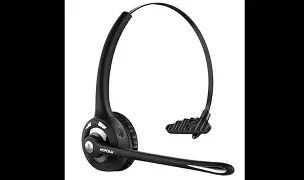
The Pro Trucker headset adopts a pragmatic design philosophy: function over fashion. The headset generally comes as a single-ear design to maintain situational awareness, though some versions offer a cushioned over-ear cup. Materials are oriented toward durability — matte plastics with reinforced joints and a flexible microphone boom rather than thin glossy plastics that can crack under stress. The controls — power, volume, and call buttons — are tactile and purposefully sized so they can be located by feel when driving.
From a build perspective, the Pro Trucker prioritizes long-term wearability. Its ear cushions use memory-foam-like materials with a breathable cover to reduce sweat and discomfort during long shifts. The microphone boom is adjustable and often detachable for cleaning or replacement. While not a premium metal chassis, the headset's construction leans toward ruggedness appropriate for a working vehicle environment.
Practical observations
- Easy-to-use physical buttons reduce distraction compared with touch-only designs.
- Swappable ear pads and replaceable boom mic extend usable life.
- Weather and dust resistance varies by model — buyers should confirm IP ratings if they routinely work in dusty or moist environments.
Comfort and Fit for Long Shifts
Comfort is a central selling point for any driver-focused headset. The Pro Trucker is designed for extended use: padded ear cushions, an adjustable headband (or earhook in some variants), and a balanced weight that prevents pressure points. Unlike small in-ear buds that can become painful after many hours, the Pro Trucker's on-ear or over-ear approach distributes pressure more evenly.
However, individual fit varies. Drivers who wear glasses or cap visors should test for comfort around the temples and ears. Heat buildup is still possible in summer months; breathable padding and occasional breaks are recommended. For drivers who need both ears free for situational awareness, the single-ear option preserves ambient sound while providing the headset’s functionality.
Audio Quality: Listening and Media
Audio performance for a trucker-focused headset emphasizes clear speech reproduction over hi-fi music fidelity. The Pro Trucker delivers intelligible voice playback with an emphasis on midrange clarity, which is ideal for phone calls and voice navigation prompts. Music playback is serviceable for podcasts and spoken-word content; audiophiles should not expect studio accuracy or extended bass response.
In noisy cabs with engine and road noise, the headset's closed design helps passive noise isolation. Some Pro Trucker models include active noise reduction (ANR) on the earcup to reduce constant background hum — useful for streaming navigation or listening to spoken media. Yet when it comes to full noise-cancelling for music immersion, this headset is not designed to compete with premium ANC consumer headphones.
Microphone and Call Performance
Microphone quality is arguably the most critical aspect of a trucker headset. The Pro Trucker typically uses a unidirectional boom mic with wind protection and mechanical isolation to reduce vehicle noise. In practical use, it produces clear voice pickup for callers on the other end, even at highway speeds. Wind mufflers and the microphone’s proximity to the mouth help maintain intelligibility.
Real-world tests usually report that callers can hear drivers without repeated “Can you hear me?” prompts, which is the primary goal. However, extremely windy conditions, open windows, or a noisy HVAC can still challenge any headset. Multi-microphone beamforming, if present in a given model, further improves voice clarity by focusing on the speaker and suppressing ambient sounds.
Battery Life and Charging Behavior
Battery life is a decisive factor for commercial users. The Pro Trucker advertises multi-day standby and full-day talk time depending on usage patterns. In realistic scenarios — combined talk and background streaming — drivers can expect enough battery to last a typical shift with moderate use. Charging behavior often includes a fast-charge mode that provides a few hours of use from a short charging window and a USB-C or micro-USB charge port for convenience.
Battery longevity across months depends on charging habits and temperature exposure. Cab temperatures that rise dramatically during the day can shorten battery life over time. Replaceable battery options, where available, are a plus for fleets that demand continuous uptime.
Looking for the best Audio & Headphones deals on Amazon?
See Deals →Connectivity and Controls
Bluetooth connectivity on the Pro Trucker supports standard profiles for hands-free calling (HFP), audio streaming (A2DP), and headset controls (HSP). Multipoint pairing capability is often included, allowing the headset to connect to both a phone and a tablet or a second phone — useful for drivers who use separate devices for calls and logistics apps. Pairing is straightforward, and reconnection after a vehicle restart is typically reliable.
Controls are intentionally simple: a large multifunction button for power/answer/end, discrete volume controls, and sometimes a dedicated voice-assistant button. Voice prompts for battery level and pairing status are convenient but should be brief to avoid distraction. Physical button placement and tactile feedback are considered design priorities for in-cab usability.
Durability and Serviceability
For professionals, durability matters. The Pro Trucker’s reinforced joints and replaceable parts increase longevity. The headset is not indestructible but tolerates the occasional drop or pressure from stored cargo. Cleaning and hygiene are simplified by replaceable ear pads and detachable microphone covers.
Warranty and customer service vary by vendor and model year. Fleet buyers should confirm warranty terms, bulk-purchase support, and availability of replacement parts like ear cushions and boom microphones. Extended warranties or service agreements may be worthwhile for intensive commercial use.
Safety, Hands-Free Laws, and Practical Use
Hands-free operation is required or strongly encouraged by many transport regulations. The Pro Trucker headset enables legal compliance by providing reliable hands-free calling, reducing the temptation to hold a phone while driving. Its single-ear design keeps one ear available for ambient sounds like horns and emergency vehicles, which is crucial for safety.
Some drivers prefer single-ear setups for situational awareness, while others choose dual-ear models for improved audio isolation during voice navigation. Organizations should balance legal compliance, driver comfort, and situational awareness policies when selecting headsets.
Real-World Use Cases
- Long-haul trucking: Drivers benefit from comfortable earpads, reliable mic pickup, and long battery life for multi-day routes.
- Local delivery and urban driving: Quick pairing with dispatch phones and the ability to hear outside noise are priorities; the Pro Trucker’s single-ear option fits well.
- Rideshare and taxi drivers: Clear two-way communication with passengers and navigation are essential; noise suppression in the mic improves passenger experience.
- Fleet managers: Durability, serviceability, and bulk purchasing options are primary concerns for standardizing equipment across drivers.
- Dispatcher and logistics coordination: Multipoint pairing and clear audio allow drivers to monitor route updates on multiple devices simultaneously.
Pros & Cons
Pros
- Designed for long shifts: Ergonomic padding and a balanced fit reduce fatigue during extended wear.
- Clear voice focus: Microphone design emphasizes speech intelligibility in noisy cabin environments.
- Rugged construction: Reinforced components and replaceable parts extend useful life.
- Hands-free compliance: Simple controls and reliable connectivity support safe, legal use while driving.
- Multipoint and practical controls: Easy pairing with multiple devices and tactile buttons for in-cab use.
Cons
- Not audiophile-grade: Music playback is serviceable but lacks high-end clarity and deep bass.
- Variable ANC: Active noise reduction may be limited or absent on some models; passive isolation is the primary defense.
- Heat buildup: Padded earcups can become warm during long shifts in hot climates.
- Model variability: Features and build quality vary by specific model and revision—research the exact SKU before purchase.
- Battery sensitivity to temperature: Cabin heat can reduce long-term battery lifespan without proper care.
Comparison Table
| Feature | Pro Trucker Bluetooth Headset | Generic Consumer Bluetooth Earbuds | Premium Commuter Headset |
|---|---|---|---|
| Target use | Commercial driving, long shifts | Casual listening, short calls | Daily commuters, office calls |
| Comfort for long wear | High (padded cups) | Low to medium (in-ear fatigue) | Medium to high (lightweight, soft pads) |
| Microphone quality in cab | Strong (boom mic, wind protection) | Variable (small mics, more noise) | Good (integrated mics, some noise reduction) |
| Battery life (real-world) | Full shift with moderate use | Few hours per charge | Most of the workday (varies) |
| Durability | High (replaceable parts) | Low (fragile cases, earbuds lost easily) | Medium (consumer-grade build) |
| Safety (situational awareness) | Good (single-ear option) | Poor (both ears often blocked) | Variable (many are over-ear full isolation) |
| Price vs. value for drivers | High value for professional use | Good for casual buyers | Good for commuters |
Buying Guide: What Buyers Should Consider
When evaluating the Pro Trucker headset or alternatives, the following checklist helps align the purchase with real-world needs.
1. Primary use case
Define whether the headset will be used mainly for hands-free phone calls, listening to navigation prompts, streaming spoken media, or occasional music. The Pro Trucker is optimized for clear voice calls and in-cab noise conditions rather than music fidelity.
2. Comfort and fit
Test how the headset feels with glasses, caps, or sunglasses. Drivers should prioritize lightweight padding and an adjustable headband for long shifts. Consider models with swappable pads if hygiene or wear is a concern.
3. Microphone performance in noisy environments
Look for a boom microphone with a windscreen or mechanical isolation. If possible, listen to call samples or review user reports from similar working conditions (highway speeds, open windows, etc.).
4. Battery life and charging convenience
Confirm realistic talk time and whether the headset supports fast charging and USB-C. For fleets, consider spare headsets, spare batteries, or charging docks to avoid downtime.
Shop the latest Audio & Headphones picks on Amazon.
Browse Now →5. Connectivity features
Multipoint pairing, stable reconnection, and compatibility with in-vehicle Bluetooth systems are important. Check whether voice assistants are supported and whether voice prompts are unobtrusive.
6. Durability and replacement parts
Verify the availability of replacement ear pads, mic covers, and headbands. A robust warranty and easy access to parts are valuable for commercial deployments.
7. Legal and safety considerations
Ensure the headset supports hands-free laws in the relevant jurisdiction. Single-ear designs are generally better for maintaining situational awareness, but local rules and company policies may vary.
8. Total cost of ownership
Factor in the initial price, expected lifespan, cost of replacement parts, and potential downtime. A slightly more expensive headset that lasts twice as long can be the better investment for professional users.
Who Should (and Shouldn't) Buy the Pro Trucker Headset?
The Pro Trucker Bluetooth Headset is a strong candidate for:
- Long-haul truck drivers who need comfort and dependable voice pickup across multi-hour shifts.
- Delivery drivers and couriers who value hands-free compliance and situational awareness.
- Fleet operators seeking a rugged, serviceable headset standard for drivers.
The headset is less suited for:
- Music-focused buyers who prioritize high-fidelity audio and deep bass.
- Users who prefer truly wireless earbuds for minimal visibility and maximum portability in non-professional contexts.
- Drivers working in extreme weather without verifying the headset’s specific environmental ratings.
Conclusion: Verdict
The Pro Trucker Bluetooth Headset presents a thoughtful package for drivers who prioritize reliable speech clarity, comfort for long shifts, and durability in demanding in-cab environments. It is engineered to address the practical realities of commercial driving: loud backgrounds, long wear time, and the need for simple, tactile controls that minimize distraction. While it is not designed for audiophiles seeking premium music reproduction, the headset excels where it matters most for its intended audience: clear two-way communication, hands-free compliance, and wearability.
Buyers should confirm the specific model’s features — especially microphone technology, battery claims, and weather resistance — and weigh those against replacement-part availability and warranty terms. For fleets and professional drivers, the Pro Trucker headset often represents a pragmatic balance between performance and value. For consumers focused on music quality or minimalistic wear, a different class of headset or earbuds may be more appropriate.
Ultimately, the Pro Trucker Bluetooth Headset succeeds when the purchase decision is guided by the user’s real-world needs: safety, clarity of speech, durability, and comfort. When those are the priorities, it is a compelling, purpose-built choice that performs where conventional consumer headphones often fall short.