Which is Better Value? Intel In 2025 Year In vs Asus Vivobook 14 2026 Compared
Choosing between a compact, performance-focused Intel platform and a mainstream thin-and-light laptop like the Asus Vivobook 14 2026 comes down to how a buyer balances performance, portability, and long-term value. This article examines both offerings through practical lenses: everyday productivity, creative work, light gaming, battery life, upgrade paths, and total cost of ownership. The goal is to help potential buyers decide which device delivers better value for their real-world needs rather than simply comparing headline specifications.
How this comparison is structured
The analysis covers real-world use cases buyers typically care about: responsiveness for office work, media editing, web development, travel and mobility, repairability and upgrades, connectivity, and long-term relevance (drivers, platform features, and ecosystem). Each product receives a focused review, followed by pros and cons lists, and a direct side-by-side comparison table. A practical buying guide follows with recommendations for different buyer profiles.
Product review: Intel In 2025 Year In (platform overview)
The "Intel In 2025 Year In" entry in this comparison represents Intel's 2025-generation platform offering: a compact desktop or small-form-factor system built around the latest client CPUs and platform features introduced that year. The platform emphasizes improved single-thread and multi-thread throughput, higher efficiency, and expanded on-die accelerators aimed at productivity and generative AI workloads. For buyers who assemble desktops, buy prebuilt mini-PCs based on the platform, or use it in a compact workstation, the strengths lie in raw compute, sustained performance, and upgrade headroom.
Performance and workloads
In practice, the 2025 Intel platform is well-suited to tasks that benefit from strong CPU performance: large spreadsheet calculations, software compilation, photo editing, light to moderate video editing, and running multiple virtual machines or containers for development. The combination of higher instructions-per-clock (IPC) and higher core counts in many 2025 chips means noticeably faster responsiveness for threaded workloads compared with typical thin-and-light laptops. Users who prioritize desktop-class thermal headroom will see fewer thermal throttling moments and more consistent sustained performance.
Graphics and AI capabilities
Integrated graphics on 2025 Intel silicon improve enough for smooth video playback, casual esports titles at modest settings, and GPU-accelerated video editing tasks at lower timelines. More importantly for many buyers, Intel's platform-level AI features — inference accelerators, media block improvements, and software toolchain support — make the platform a practical choice for users experimenting with on-device AI tasks such as image upscaling, transcription, or local model inference. While not a replacement for discrete high-end GPUs, these on-chip accelerators boost everyday productivity workflows.
Expandability and connectivity
One of the Intel platform's clear advantages is its upgrade path. Mini-ITX or small-form-factor motherboards commonly used for these systems typically support user-replaceable storage and memory, and many prebuilt units use socketed CPUs. The platform also emphasizes modern connectivity: native support for PCIe Gen4 or Gen5 lanes, multiple NVMe slots, robust Thunderbolt/USB4 and Wi‑Fi 7 or advanced Wi‑Fi 6E options depending on vendor implementation. For users who rely on external displays, fast storage, and docking, this matters for longevity.
Real-world use cases
- Home office or small business desktops that need reliable multitasking and occasional media work.
- Developers compiling code or running local containers/VMs.
- Creators who edit photos or short-form video and want quick export times without a discrete workstation GPU.
- Power users who value upgradeability and repairability over absolute portability.
Intel In 2025 Year In — Pros & Cons
- Pros:
- Superior sustained CPU performance for multi-threaded workloads.
- Better upgradeability (memory, storage, sometimes CPU, and discrete GPU options).
- Strong I/O and platform features suitable for desks and docks (Thunderbolt/USB4, multiple NVMe).
- On-platform AI accelerators that help everyday productivity tasks.
- Cons:
- Not portable — requires external display, peripherals, and a desk setup.
- Higher initial footprint; total cost may increase if discrete GPU or upgrades are added.
- Power draw and noise are factors under sustained loads compared with ultra-efficient laptops.
Product review: Asus Vivobook 14 2026
The Asus Vivobook 14 2026 occupies the mainstream 14-inch thin-and-light segment, balancing portability, battery life, and day-to-day performance. Historically, the Vivobook line targets students, professionals who travel, and anyone who wants a compact laptop that handles typical productivity tasks without the premium price of flagship ultrabooks. The 2026 model continues this tradition by offering modern CPUs, an efficient thermal design, and a generous array of ports for its class.
Shop the latest Laptops & Computers picks on Amazon.
Browse Now →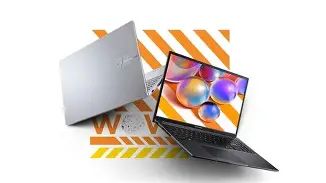
Portability and build
For buyers who move between home, office, and cafés, the Vivobook 14's 14-inch chassis hits a practical sweet spot: screen real estate adequate for multitasking yet small enough to keep weight and footprint low. The construction typically uses a mix of compact metal and plastic to keep costs down while maintaining reasonable rigidity. In real use, it slips easily into backpacks and commuter bags, and modern hinge designs permit comfortable lap use.
Battery life and displays
Battery life in a 14-inch Vivobook tends to prioritize all-day productivity: web browsing, document editing, video streaming, and light content creation. Buyers will find battery performance adequate for a workday under mixed use, provided they select energy-efficient configurations. Displays emphasize color accuracy adequate for photo editing at a hobbyist level, with options often available for higher-brightness or higher-color-gamut panels in select SKUs.
Everyday performance
The Vivobook 14 2026 performs well for office suites, multitab browsing, remote meetings, and light editing. Thermal constraints inherent to thin laptops mean peak sustained CPU performance will generally be lower than a desktop platform, but the tradeoff is improved battery life and quiet operation in many scenarios. The laptop is also a sensible choice for students and professionals who need a balanced mix of price, portability, and capability.
Real-world use cases
- Students and remote workers who prioritize portability and long battery life over raw compute power.
- Traveling professionals who need a compact machine for presentations, email, and cloud work.
- Casual creators who do photo editing and light video work on the go.
- Buyers on a moderate budget who want a modern laptop with a respectable feature set.
Asus Vivobook 14 2026 — Pros & Cons
- Pros:
- Compact and lightweight for everyday mobility.
- Designed for long battery life in everyday mixed use.
- Good selection of ports for a thin laptop (often includes USB-C, HDMI, and SD or microSD).
- Generally good value for price in the mainstream market segment.
- Cons:
- Thermally constrained — sustained heavy workloads may throttle.
- Limited upgradeability compared with desktop platforms.
- Display and component choices vary by SKU; the base model may use lower-quality panels.
Side-by-side comparison
| Category | Intel In 2025 Year In (Compact Desktop/Platform) | Asus Vivobook 14 2026 (14-inch Laptop) |
|---|---|---|
| Form factor | Desktop/small-form-factor — requires separate display and peripherals | Integrated laptop — all-in-one portable solution |
| Best for | Power users, creators, developers, users who value upgradeability | Students, commuters, remote workers, users prioritizing portability |
| Performance | Higher sustained CPU throughput and thermal headroom | Good burst performance; lower sustained performance under heavy loads |
| Graphics & AI | Improved integrated graphics; platform AI accelerators suitable for local inference | Adequate integrated graphics for casual gaming; AI features vary by CPU SKU |
| Portability | Poor — not portable without accessories | Excellent — designed for carry and travel |
| Battery life | N/A (desktop) — depends on PSU and display choices | Designed for all-day use under typical workloads |
| Upgradeability | High — RAM, storage, and sometimes CPU and GPU upgrades possible | Limited — storage and in some models RAM upgrades only |
| Connectivity | Rich I/O options (PCIe lanes, multiple NVMe slots, Thunderbolt/USB4 support) | Good mix of modern ports; fewer expansion options compared with desktop |
| Repairability | Generally better — easier to swap parts in small desktops | Varies; many Vivobooks are moderately serviceable but less so than desktops |
| Value (typical) | Better long-term value for upgrade-minded buyers; initial cost may be higher | Better out-of-the-box value for mobile users at mid-range prices |
Buying guide: which one to pick based on buyer needs
Deciding between the Intel 2025 platform and the Asus Vivobook 14 2026 requires mapping personal priorities to device strengths. Below are common buyer scenarios and recommended directions.
1. Prioritizes raw, sustained performance and upgradeability
If tasks include compiling large codebases, rendering long video timelines, running multiple local VMs, or wanting the ability to add a discrete GPU later, the Intel 2025 platform provides better headroom. Desktops typically provide better cooling and allow incremental upgrades that extend useful life, improving total cost of ownership over several years.
2. Needs true mobility and all-day battery life
For those who spend most of the day moving between meetings, classes, or working remotely, the Vivobook 14 2026 is the sensible choice. It delivers sufficient performance for office apps, web work, and light content creation while keeping weight and battery considerations in check.
3. Wants balanced value without upgrade complexity
Buyers who prefer a single device that does everything reasonably well without worrying about future upgrades will appreciate the Vivobook's simplicity. It avoids the extra expense and knowledge required to build or expand a desktop and includes warranty and support tailored for laptop users.
Discover deals on Laptops & Computers — updated daily.
See Deals →4. Works with AI-driven local tools and needs occasional offline inference
The 2025 Intel platform's on-die AI accelerators and platform-level features can be attractive for users experimenting with local AI workflows. While some laptop CPUs also include AI features, desktops often have better thermal headroom to utilize those accelerators at higher utilization levels.
5. Budget-conscious with focus on long-term ownership
While a Vivobook can be very affordable upfront, the desktop route can become more cost-effective over time if the buyer leverages upgradeability — for example, adding more RAM or storage when needed instead of replacing the entire system. Total value depends on how long the device remains in use and whether future upgrades are likely.

Practical tips when comparing specific SKUs
- Check the CPU and cooling together: a high-end chip in a thin laptop may not sustain its rated performance due to thermal limits; look for reviews that measure sustained performance.
- Inspect the display: color accuracy, brightness, and resolution matter for creators and frequent outdoor use. A slightly higher-quality panel is often more valuable than a marginally faster CPU for visual tasks.
- Consider ports and docking: if the user frequently connects external monitors or fast storage, ensure the chosen laptop has Thunderbolt/USB4 or the desktop build supports the required I/O.
- Upgrade roadmap: if future upgrades are likely, prioritize platforms that make upgrades simple and inexpensive.
- Warranty and support: laptop warranties often bundle on-site or mail-in service; desktops may have separate warranties by component — weigh convenience against flexibility.
Conclusion
Both the Intel In 2025 Year In platform and the Asus Vivobook 14 2026 deliver compelling value, but they serve distinct buyer needs. The Intel platform provides stronger sustained performance, better upgradeability, and platform features that benefit developers, creators, and users who want to keep a system relevant through component upgrades. It represents better long-term value for users who prioritize performance and flexibility and who accept the need for a desktop setup.
The Asus Vivobook 14 2026 delivers better immediate value for users who prioritize portability, battery life, and an integrated experience. It suits students, traveling professionals, and buyers who want a capable machine out of the box without the complexity of managing separate components. For many mainstream users, the Vivobook represents the most practical and cost-effective choice.
Ultimately, "better value" depends on the buyer's priorities: choose the Intel platform for upgradeable performance and long-term versatility; choose the Vivobook 14 2026 for compact convenience and solid day-to-day productivity on the move.